
A CULTURAL INTERVENTION IS COMING
“This is the book I’ve been pining for. As queer people, we’re often left to navigate life and aging without a map, but Dr.Taylor-Pitt has emerged as a wise cartographer who is never afraid to reveal his own vulnerabilities. There is no one way of being queer and no one way of aging, but Paul has given us all a hell of an atlas.”
Joseph Galliano-Doig MBE, co-founder, Queer Britain
“In a world rarely designed with queer people in mind, what a joy to find this smart, thoughtful book.”
Layla McCay, author of The Queer Bookshelf
“Growing up, I thought I was the only boy like me. Growing older, I began to feel alone again—where were the other men like me? Paul’s book helped reconnect me to my queerness and engage meaningfully and joyfully with my growing queer community.”
Damian Barr, author of The Two Roberts
“Still Here! Still Queer! Now What? is a powerful invitation to reclaim your wholeness, courage, and joy.”
Tim Spoor MBE, Founder, Queerwell
About the book
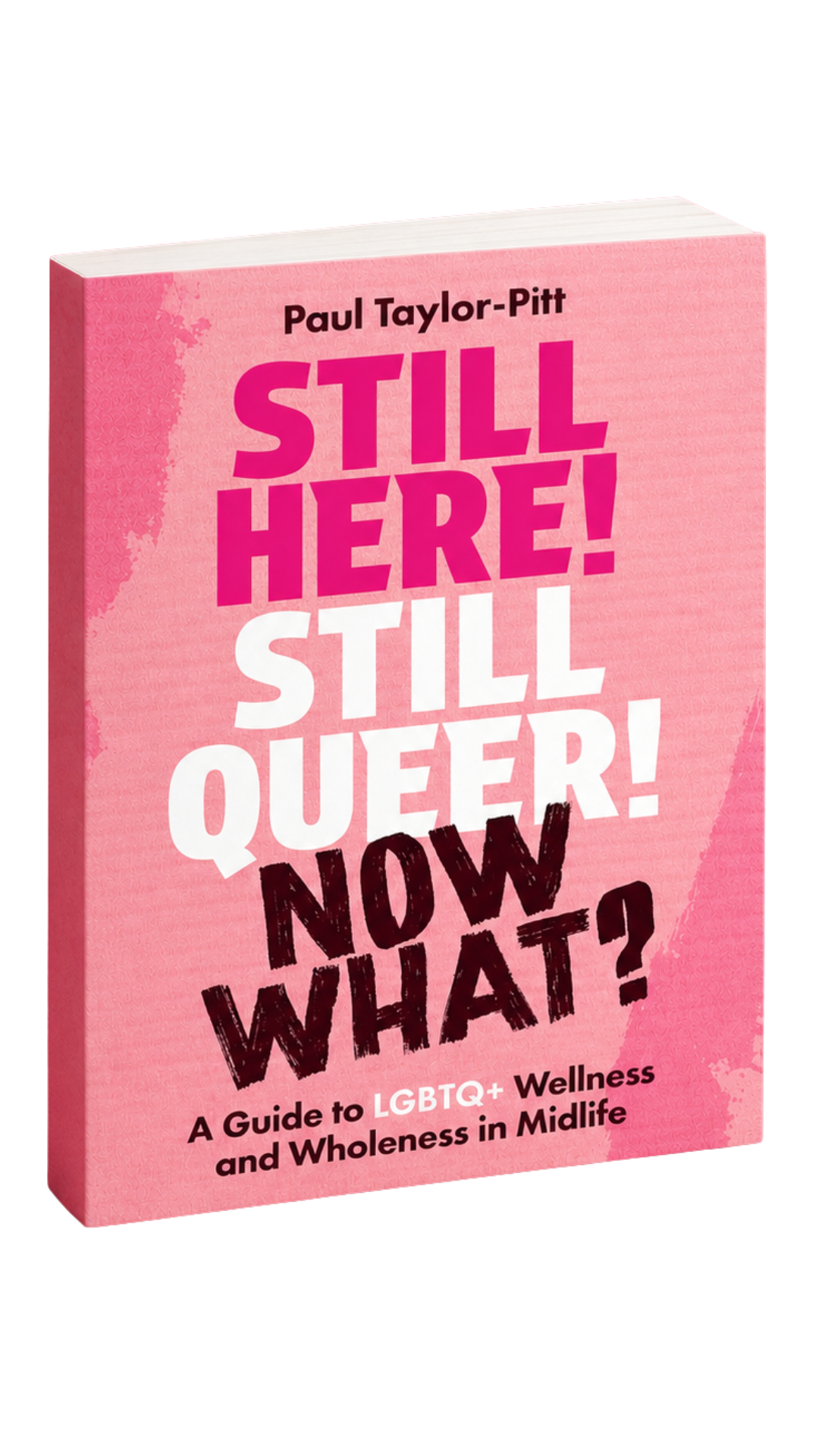
Still Here! Still Queer! Now What? is a radical, joyful, and unapologetic invitation for queer people in mid-life to reflect, reimagine and reclaim our full, fierce selves. Written specifically for LGBTQ+ folks in our 40s, 50s and beyond, those who grew up without role models, who survived a time of invisibility, and who are now navigating ageing in a world that still doesn’t quite know what to do with us.
It’s part memoir, part manifesto, and part toolkit. Through coaching-inspired prompts, philosophical inquiry, personal stories, and interviews with a wildly diverse range of queer voices, the book explores themes like authenticity, mortality, resilience, joy, shame, and transformation.
It’s the first book in the world to centre mid-life queer experience in such depth. It offers models like The Queer Wheel of Mid-Life, The Queer Wholeness Method and The Queer Mid-Life Manifesto to help readers move from crisis to confidence. It’s irreverent, poetic, tender, and political, all at once.
Still Here! Still Queer! Now What? is published by Jessica Kingsley Publishers, an imprint of Hodder & Stoughton. Paul is represented by Abi Fellows at DHH Literary Agency.
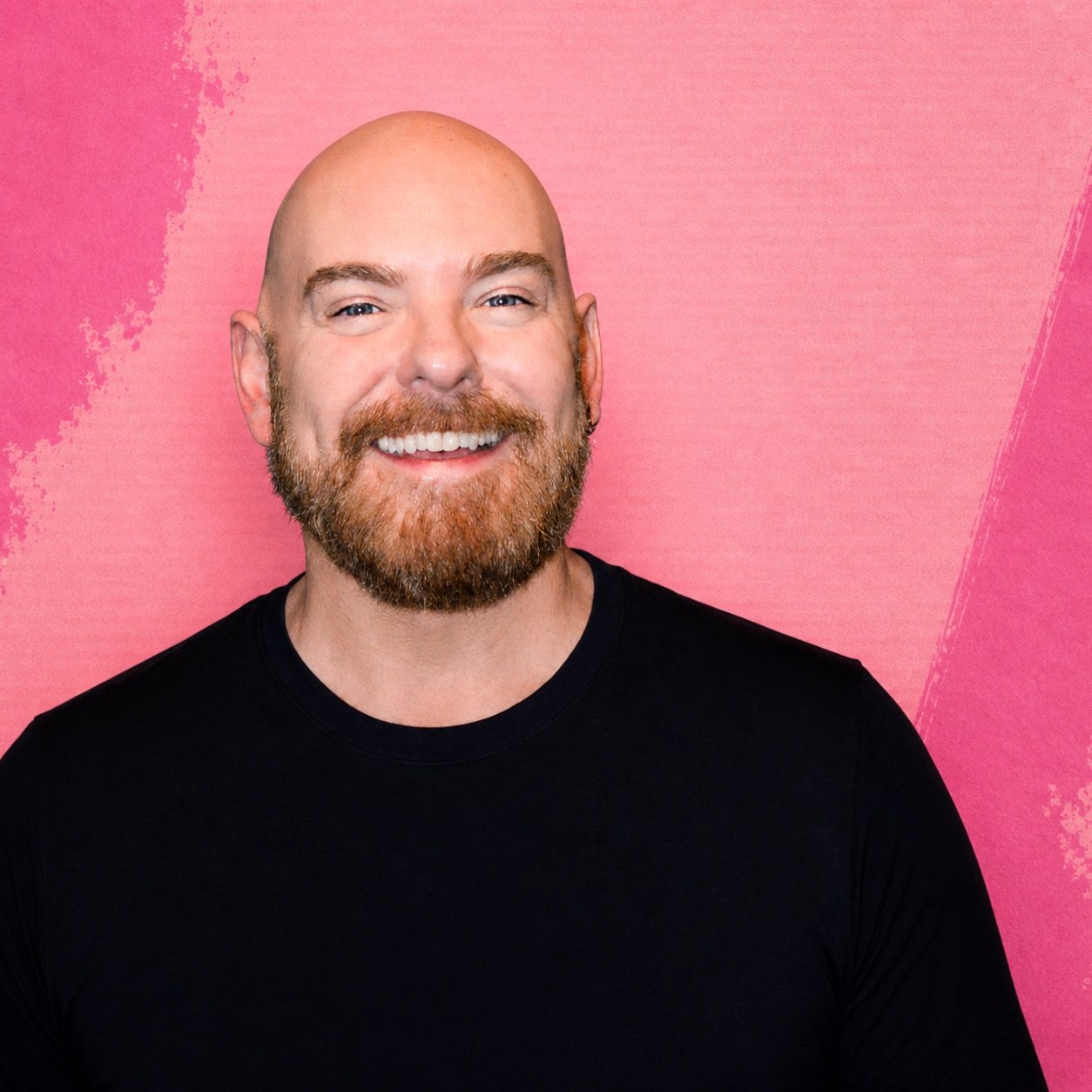
Dr. Paul Taylor-Pitt
Author, Still Here! Still Queer! Now What?
“We grew up in an era when the world was significantly more hostile to us, navigating our lives without a map. Now we face unique complexities of existing as a middle-aged queer people in a time when so many rights have been won, yet many of us still carry the weight of growing up in a unique time. We were surrounded by significant stigma, fear and loss, particularly during the AIDS crisis which took the lives of many who may have served as mentors or role models.
I find myself, more than ever, asking…now what? Writing this book has helped me learn so much about how I got to where I am, how I feel about that and what possible futures I might create for myself. If this book makes the world easier for just one other person, it is a success.
This book is a portrait of courage, resilience and authenticity. It is a love letter to those who helped us live more truthfully. It is a tribute to the first generation of people who have been able to live fully and wholly ourselves, despite exclusion, misunderstanding and rejection.
Above all, the book is a call to action and invitation for us to remember and reclaim the power and wholeness that have always been inside us. It is a promise of hope that we might find ways to thrive into our elderhood. This is not just a book, it is a celebration that we are still here, still queer and have the chance to live with renewed purpose and pride.”
The generation of us
Stories from people who generously shared their experiences and, in doing so, shaped the book.
-
I am in my mid-fifties now. For a long time, my life moved to an ambitious rhythm as a design professional, but after an economic crash wiped out my industry, I was forced to pivot into mature studies, research, and charity work. When my academic path stalled and the pandemic choked off my teaching workshops, the terrain beneath my feet became completely unrecognisable. Today, I find myself in my art studio trying to focus on my creative practice, but the old optimism has been replaced by a quiet, midlife apathy. I feel utterly lost.
It feels like I’m looking behind the curtain a little too late. Reading books on queer trauma made me realise I spent decades frantically performing at work, driven by survival mechanisms forged during my hostile, working-class 1980s childhood. Back then, the outside world was toxic; adult-only gay bars were our only sanctuary from violence. I kept my sexuality in a private box for protection.
Our generation carries a strange survivor guilt. We had no role models to show us how to grow old. Without children, my partner and I are navigating midlife in the absence of any maps. We are entirely making it up as we go along.
When I look at the next twenty years, I worry about the unknown. The thought of being forced back into the closet inside a traditional care home is terrifying. I want us to build a cooperative commune where we can look after each other. My wish for this next chapter is to stop coasting and aggressively push my art forward. I might feel lost, but as long as I am creating, I am still exploring.
-
I am 43, turning 44 in January, and my life looks radically different than it did five years ago. Back then, I was married to a man, coasting in an unfulfilling job, and my bisexual identity was sidelined.
I always knew I was different. At nine, I noticed the world was built exclusively for heterosexual nuclear families and realised that rigid blueprint didn't fit me. For years, I didn't think I was "allowed" to be part of the queer community because I was married. When I finally came out publicly on social media, my mother admitted she’d already guessed it from my sudden, intense obsession with queer books. My dad’s protective default was to text, "Are you safe in your home?" After panicking, I realised he had just Googled "bisexual" and his algorithm had served him terrifying, extreme statistics on domestic violence.
Navigating visibility in midlife has its comedy. I once accidentally stumbled into the middle of London Pride because I hadn't clocked the road closures on my way to a theater matinee. There I was, completely by accident, buzzing in the middle of the parade while thinking, “Am I actually allowed to be here?”
These days I prefer the expansive term "queer." I love subtly dropping a mention of my girlfriend into conversations with older executives in my industry just to watch their faces hilariously recalibrate as they realise their straight assumptions were totally wrong. I’ve shifted from being a perfectionist, straight-A student to embracing the beautiful, messy complexity of an authentic life.
-
I am 52, and honestly, I’m happy to be here. Growing up, my parents subliminally taught me that the world was a terrifying, judgmental place. For decades, that lesson crippled me. In my twenties, my social anxiety was so severe that I once walked around London starving, completely unable to summon the courage to step inside a McDonald’s and order food.
My realisation of being gay was a slow, agonizing dawn. I vividly remember the teenage moment I saw a male model in a tabloid and realized it was absolute sexual attraction yet I spent years denying it, planning to marry a woman just to survive. Our generation was completely bombarded by the horrors of the AIDS crisis and mainstream media telling us we should be shipped off to an island. It shoved me deep into a shameful, undercover closet.
I used to spend my lunch breaks walking down Old Compton Street, tentatively looking at the visible, unashamed gay community, terrified to even buy a magazine. Therapy has finally taught me to show compassion to that insecure younger self. Today, I belong in my own space. I unapologetically embrace my kinks, navigate sex clubs in Berlin, and refuse to be slut-shamed by anyone.
Finding myself single at this age brings its own existential challenges. We have no clear path ahead of us. Recently, looking around on a night out, I realised I’ve built a new tribe of unapologetic queer friends. Armed with this, I am finally unstoppable.
-
I’ve spent my life making sure my friends have absolutely no idea how old I am. I’ve always deliberately mixed with younger generations, like the dancers I photograph. Their outlook isn't bogged down by rigid societal expectations. My straight counterparts are entirely run down from raising families; they wear sad clothes and drain your energy like vampires.
I never had a standard coming out journey because I was never in. I went to an all-girls boarding school at five and simply always knew my truth. At 14, I had my first serious relationship with a girl. My family was incredibly dysfunctional; my mother physically abused me, which unintentionally taught me severe pain management at a very early age. Later, I discovered that the woman I called my aunt was actually my biological grandmother.
Navigating the corporate world as a lesbian in the 1980s was an abrasive wake-up call. While working in film marketing, my female boss—who happily employed a flamboyant gay man—forcefully pushed me out of the office via a fabricated "personality clash" the moment she discovered I was gay. On the streets, my girlfriend and I faced blatant homophobia, once furiously chasing a car full of girls down the Kings Road after they yelled abuse at us.
Getting older has brought physical challenges, with a sudden avalanche of health diagnoses like asthma and arthritis in my hands. I escaped the stress of London for the healing powers of the sea. Today, I refuse to accept any rigid heteronormativity. I happily call myself queer, fiercely protect our community's historical archives, and challenge the erasure of older voices. I am entirely content living on my own terms, swinging from disco balls, and greeting the chaos of the future with open arms.
-
I am forty-five years old. On good days, I feel a surge of energy far younger than my birth certificate claims; on bad days, my body groans when I bend down, and I mourn for lost time.
My coming out was a gradual, halting dawn. At fifteen, I was sneakily opening a male porn magazine in the back office of my paper-round job, terrified of being caught. For years, I rationalized my attraction—putting a poster of Michael J. Fox on my wall and telling myself I just loved Back to the Future. Mainstream 1980s culture made it explicitly clear that being gay meant shame, secrecy, and the terrifying shadow of AIDS.
If my sexuality spoke to me it would complain, "He’s supportive in private, but he never wants to hold my hand in public." I’ve spent decades controlling it, rationalising my secrecy as "nobody's business" when it was really just a mask for internalized shame. I held back for years, surrounded by straight friends and avoiding gay spaces out of a fear of rejection.
I don't have children, which has given me an incredible gift: freedom. This chapter isn’t about being over the hill; it’s our second coming, our resurrection. It’s time to scrap the path, embrace our queer power, and leap into the unknown.
-
I am forty-five years old, and honestly, I didn't think I was going to get this old. Growing up in Nottingham in the 1980s as a gender-nonconforming child with a beloved My Little Pony, I faced constant marginalisation. At home, I was outed and my father’s immediate reaction was to pack my bags and send me away to stay with my grandmother to "sort it out." It put a wall between us that lasted for decades. Before he died, he offered a stilted apology, explaining that he just feared my life would be too difficult under the shadow of the AIDS crisis.
Training as a professional dancer in the nineties brought its own terrible, soul-chipping moments. During the pandemic, I watched a video of myself performing at age twenty. While my dancing was excellent, the moment I had to simply stand on stage and be myself, I looked so devastatingly sad and lacking in confidence. That epiphany ignited my queer rage.
Today, I work backstage as a theatre dresser, a wonderfully camp job making actors look pretty. While teaching ballet, my studio would fill with marginalised queer and trans kids at lunch. We’d just eat sandwiches and talk about Drag Race. Providing those kids with twenty minutes of safety—the exact mentor I was desperate for at their age—is the legacy I am proud to pay forward. I am done stepping out of the way.
-
I am 41 years old. Hitting this age brought a profound internal shift, forcing me to become deeply mindful of my time, my body, and my energy. I am navigating that delicate, mature space between past youth and future expectations, trying to simply anchor myself in the present moment.
Growing up in a traditional, conservative Brazilian family, my concept of adulthood was tied to a rigid heteronormative script: marry a woman and have kids. In my early twenties, I suppressed my natural attraction to men to maintain the hard-working, straight persona I thought my father demanded. I even forced myself to look away from the hot guys in my dance group. But my body kept telling me what it actually wanted.
The turning point came at 28 when a prime-time soap opera featured a gay character. Seeing that human representation shattered my isolation. I thought, “We exist.” I voluntarily came out to my father, who coldly told me to seek a doctor or a priest. My standard for parental support was low, but my mother, sister, and brother embraced me completely.
Now, I’ve channeled my skills into creating a financial fund, using my profits to deliberately back LGBTQ+ causes and protect our community. I am transitioning away from straight circles to surround myself with a beautiful network of gay men. I am learning to ask for help, to surrender control, and to know with absolute certainty that there is nothing wrong with me.
-
I am fifty-three, and I finally have the confidence to be exactly who I am. Turning fifty triggered a massive internal stocktake. I looked back at decades of hiding and realised it was time to change.
I grew up in an era where mainstream society weaponised sexuality. Desperate to fix my desires, I entered religious conversion therapy as a vulnerable teenager. It didn't cure me; instead, it planted a toxic, invisible poison right in my gut, just above my stomach. I carried that paralysing weight for over forty years, trapped in an absolute cyclone of self-loathing. I hid my truth, marrying a woman and entering the Church of England.
I finally came out at twenty-nine, sitting drunk on a park bench with a straight friend. Decades later, at fifty, a specialised gay counselor helped me achieve a monumental breakthrough: that crippling inner darkness wasn’t mine. It was shame given to me by a judgmental world. I walked away from the church immediately.
Now happily married to my husband, with two grown children who anchor my legacy, I refuse to censor my story. Armed with a healthy, righteous anger, I am done carrying anyone else's expectations.
Listen to the podcast
The first season of Still Here! Still Queer! Now What? The Podcast! f
Watch the podcast
Season II of the podcast is coming right in your eyes as well as your ears. Listen on Spotify, Apple or PocketCasts and watch on YouTube.
GET YOUR TICKETS NOW
GET YOUR TICKETS NOW
RESOURCES
Audiobook listeners can download the resources chapter here.